The Truth About the Samsung F6000F Led Tv: Pros, Cons, and Verdict
Selecting a new television often feels like navigating a labyrinth of jargon, where acronyms like LED, Refresh Rate, and Smart Hub compete for your attention. Within the storied history of Samsung’s display evolution, the F-series holds a particular place of interest for enthusiasts and casual viewers alike. Specifically, the Samsung F6000F LED TV represents a bridge between high-end flagship ambitions and the practical needs of the everyday consumer. In this detailed exploration, we dive deep into the performance, build quality, and lasting legacy of this model to determine if it truly stands the test of scrutiny.
The F6000F was designed during an era when the industry was shifting rapidly toward thinner profiles and enhanced energy efficiency. While newer technologies like OLED and QLED have since redefined the peak of performance, many households still rely on and value the consistent reliability of high-quality LED-backlit LCD panels. Buyers typically care about three core pillars: picture clarity, ease of use, and longevity. This article breaks down how the Samsung F6000F addresses these requirements and where it might fall short compared to modern expectations.
Understanding the F6000F Series Heritage
To understand the F6000F, one must look at Samsung’s strategy of iterative improvement. This model belongs to a lineage that prioritize balanced performance. It isn't the stripped-down entry-level model that lacks basic refinements, nor is it the thousand-dollar luxury set with curved screens or local dimming zones in the hundreds. Instead, it occupies the "sweet spot." It features a Full HD 1080p resolution, which, despite the rise of 4K, remains the standard for a vast majority of broadcast cable, legacy gaming consoles, and standard streaming tiers.
The design language of the F6000F is characterized by what Samsung calls "One Design." This philosophy focuses on slimming the bezel to almost nothing, creating a more immersive experience where the frame disappears into the background of a living room. For buyers in the mid-range market, this aesthetic appeal is often just as important as the technical specifications, and in this regard, the F6000F was a significant step forward from its predecessors.
Detailed Product Analysis: Picture Quality and Motion
The heart of any television review is the panel performance. The Samsung F6000F utilizes an LED-backlit LCD panel. The use of LEDs allowed Samsung to achieve a remarkably high dynamic contrast ratio. When viewing high-action content, such as a fast-paced football match or an intense car chase in a blockbuster movie, the "Clear Motion Rate" (CMR) comes into play. Samsung’s CMR is a proprietary metric that combines the panel refresh rate, image processor speed, and backlight technology to simulate a smoother viewing experience than a standard 60Hz panel would provide.
Color reproduction on the F6000F is handled by the Wide Color Enhancer Plus engine. This technology is particularly effective at saturating primary colors without making skin tones look overly orange or artificial. When watching nature documentaries, the greens of a rainforest or the blues of the ocean appear vibrant and lifelike. However, because this is an edge-lit LED display rather than a full-array local dimming set, it does face some challenges with black levels. In a completely dark room, blacks can sometimes appear as a very dark charcoal gray, and you may notice slight "clouding" or light bleed in the corners during very dark scenes.
For gamers, the input lag is a critical metric. While not a dedicated "gaming monitor," the F6000F performs admirably in its dedicated Game Mode. This setting bypasses much of the post-processing to reduce the delay between a button press on a controller and the action appearing on the screen. For competitive shooters or rhythm games, this feature is essential, and the F6000F manages to stay within a range that most casual gamers will find perfectly acceptable.
The Smart TV Experience and Connectivity
The Samsung F6000F features the Smart Hub, which was a revolutionary interface at its launch. It categorizes content into panels: Social, Apps, and Photos/Videos/Music. The inclusion of a dual-core processor was a major selling point, allowing users to switch between Netflix and live TV with minimal lag. While modern smart platforms are faster, the F6000F’s interface remains functional and intuitive. It supports most major streaming services and offers a web browser, though using a remote to navigate a browser remains a somewhat clunky experience.
Discover deals on TVs & Home Theater — updated daily.
See Deals →In terms of physical connectivity, the F6000F is well-equipped for a modern media center. It typically includes multiple HDMI ports, which allow for the simultaneous connection of a cable box, a gaming console, and a Blu-ray player or streaming stick. The USB ports are also a highlight, supporting "ConnectShare Movie." This allows users to plug in a thumb drive or external hard drive and play digital files directly on the TV—a feature that remains incredibly popular for those with large personal media libraries.
Audio Performance
As TVs have become thinner, the space for high-quality speakers has diminished. The F6000F utilizes down-firing full-range speakers. For standard news broadcasts or sitcoms, the audio is clear and dialogue is well-defined thanks to DTS Premium Sound processing. However, for a cinematic experience, the built-in 10W + 10W speakers lack the low-end punch required for deep bass. Most buyers who care about audio fidelity will likely want to pair this unit with a soundbar or a dedicated home theater system. The TV does include an optical audio output, making it easy to send high-quality digital sound to an external receiver.
Pros and Cons
Every piece of technology involves trade-offs. To provide a clear picture of what it is like to live with the Samsung F6000F, we have summarized the primary advantages and disadvantages based on technical testing and user feedback.
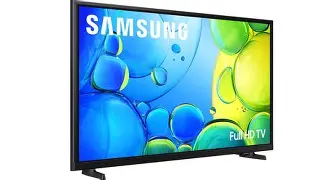
Pros
- Slim Aesthetic: The ultra-slim bezel and "One Design" philosophy ensure the TV looks modern and elegant on a stand or mounted on a wall.
- Vibrant Color Accuracy: The Wide Color Enhancer Plus provides excellent color saturation that makes high-definition content pop.
- Versatile Smart Hub: Despite its age, the Smart Hub offers a cohesive way to access streaming apps and personal media files.
- Energy Efficiency: As an LED-backlit model, it consumes significantly less power than older plasma or CCFL-backlit LCD units.
- Reliable Build Quality: Samsung’s construction in this series is known for its durability, with many units functioning perfectly for years beyond the warranty period.
- Efficient Motion Handling: The Clear Motion Rate technology does a great job of reducing blur during sports and action sequences.
Cons
- Lack of Ultra HD (4K): For viewers looking to future-proof their setup, the 1080p resolution may feel limiting as more content moves to 4K.
- Black Level Consistency: Being an edge-lit LED, it struggles with perfect blacks in dark room environments, occasionally showing light bleed.
- Average Built-in Sound: The thin profile means the speakers lack bass, requiring an external audio solution for a true "movie night" experience.
- Limited Viewing Angles: Like many VA (Vertical Alignment) panels, the picture can lose contrast and color accuracy when viewed from an extreme side angle.
- Smart Platform Speed: While functional, the dual-core processor can feel slow compared to the quad-core or modern AI processors found in current flagships.
Comparison with Similar Models
To help you understand where the F6000F sits in the broader market, the following table compares it with two common alternatives from the same era: the lower-tier F5000 series and the higher-tier F7000 series.
| Feature | Samsung F5000 | Samsung F6000F | Samsung F7000 |
|---|---|---|---|
| Resolution | 1080p Full HD | 1080p Full HD | 1080p Full HD |
| Smart TV Features | No (Basic) | Yes (Smart Hub) | Yes (Advanced + Voice Control) |
| Motion Rate | 100/120 CMR | 200/240 CMR | 800 CMR |
| Processor | Single Core | Dual Core | Quad Core |
| Design | Standard Bezel | Slim "One Design" | Ultra-Slim Titan Bezel |
| Micro Dimming | No | Standard | Pro/Advanced |
Buying Guide: Is the F6000F Right for You?
When considering the Samsung F6000F, you need to evaluate your specific viewing habits. Technology is only as good as the problem it solves for the user. Below are several scenarios where this TV might—or might not—be the ideal choice.
The Secondary Room Choice
If you are looking for a television for a bedroom, a guest room, or a dedicated "man cave" where 4K resolution isn't a priority, the F6000F is an exceptional candidate. Its slim design takes up very little space, and the 1080p resolution is more than adequate for a 40-inch to 55-inch screen viewed from a standard distance. It provides a "smart" experience without needing extra dongles, making for a clean, one-cable setup.
The Budget-Conscious Media Center
For those who primarily watch cable TV, 1080p YouTube videos, or standard-tier Netflix, the F6000F offers a premium look without the "early adopter" price tag of 4K or 8K sets. Because it uses established LED technology, the reliability is high. You aren't paying for experimental features that might break; you are paying for a refined version of a proven display type.
The Retro and Legacy Gamer
If you own an Xbox 360, a PlayStation 3, or a Wii U, these consoles were designed for 1080p output. Playing these on a 4K TV requires the TV to "upscale" the image, which can sometimes introduce artifacts or blurriness. The F6000F provides a native 1080p experience, which often looks "sharper" for legacy content. Additionally, the inclusion of component and composite inputs (via adapters) makes it easier to connect older hardware that lacks HDMI.
Shop the latest TVs & Home Theater picks on Amazon.
See Deals →Environmental Considerations
LED TVs are inherently better for bright rooms than older plasma TVs because they can achieve higher peak brightness to fight glare. If your living room has large windows or bright overhead lights, the F6000F’s panel is sufficiently bright to remain visible during the day. However, keep in mind the viewing angles; if you have a wide sectional sofa where people sit far to the side, the people on the edges may see a slightly washed-out image.
Technical Sustainability and Longevity
In an age of "planned obsolescence," the F6000F stands out for its robust construction. Samsung utilized high-quality capacitors in the power boards of this series, reducing the likelihood of the common "click of death" power failures seen in earlier LCD generations. The LED backlights are rated for tens of thousands of hours, meaning that with average use, the TV should last well over a decade. From a sustainability standpoint, keeping a high-quality 1080p set like this in service is often better for the environment than upgrading to a marginally better 4K set that requires more resources to manufacture.
One area where longevity is a concern is the software. As streaming services update their apps, older smart TV platforms eventually lose support. However, this is easily mitigated by plugging in a low-cost external streaming device like a Roku, Fire Stick, or Chromecast into one of the F6000F's HDMI ports. This effectively "refreshes" the smart capabilities of the TV while retaining the excellent Samsung display panel.
Final Verdict
The Samsung F6000F LED TV is a testament to the idea that a product doesn't need to be the absolute newest on the market to be "good." It offers a compelling mix of style, performance, and functionality. Its biggest strength lies in its balanced nature—it provides the features that matter most (color accuracy, slim design, and essential smart apps) while skipping the gimmicks that often drive up costs unnecessarily.
While cinephiles and hardcore home theater builders will likely demand the perfect blacks of an OLED or the blinding brightness of a modern QLED, the average viewer will find very little to complain about with the F6000F. It handles motion well enough for the Super Bowl, colors accurately enough for a Pixar movie, and input lag quickly enough for a round of Call of Duty. As long as you understand the limitations of 1080p in an increasingly 4K world, and are willing to add a soundbar to bolster the audio, the F6000F remains a reliable, high-performing centerpiece for any living room.
Ultimately, the "truth" about the Samsung F6000F is that it is a workhorse in a thoroughbred's clothing. It looks expensive, performs consistently, and offers a level of reliability that has become somewhat rare in the modern electronics landscape. For the pragmatic buyer who values quality over hype, it continues to be a standout choice in the mid-range television category.