Nebula Mars 3 Honest Review — Is the Hype Justified?
I still remember the first time I pulled the Nebula Mars 3 out of its box. As a self-proclaimed home cinema enthusiast who has spent more than a decade tinkering with everything from high-end ceiling-mounted laser projectors to those cheap, plastic-laden units you find for fifty bucks online, I was skeptical. The marketing for the Mars 3 was aggressive, positioning it as the ultimate "all-terrain" projector. I’ve heard those promises before, and usually, they result in a device that is mediocre at everything and master of nothing. However, after living with the Mars 3 for nearly four months, using it in my living room, my backyard, and even on a rainy camping trip in the Pacific Northwest, I’ve developed a very nuanced perspective on whether this machine actually lives up to the significant price tag and the surrounding buzz.
When I bought the Mars 3, I wasn't just looking for a gadget; I was looking for a solution to my specific lifestyle. I live in a relatively small apartment during the week but spend my weekends outdoors. I wanted a projector that could serve as my main television on a Tuesday night but could be tossed into a backpack (or at least a sturdy tote) on a Friday afternoon without requiring a tangled mess of power bricks and external speakers. The Mars 3 promised 1000 ANSI lumens, a massive built-in battery, and ruggedized protection. It sounded too good to be true, and in some ways, I've found that while the hype is largely justified, there are specific quirks and "real-world" limitations that the glossy advertisements conveniently leave out.
Design and Build Quality: Not Your Average Plastic Box
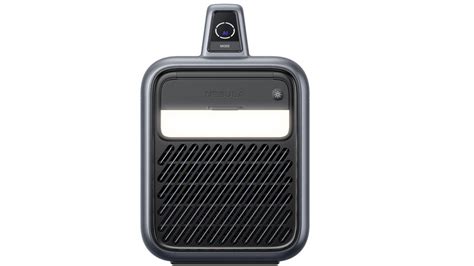
The first thing I noticed when I picked up the unit was the weight. It’s heavy—about ten pounds. This isn't one of those lightweight portable units you can balance on a flimsy tripod. In my experience, this weight is actually a sign of the build quality. The outer shell feels incredibly dense, and the "ruggedized" aesthetic isn't just for show. I unfortunately tested this durability early on when the unit slid off a low wooden bench onto packed dirt. Aside from a small scuff on the rubberized corner, it was completely unfazed. I really appreciated the integrated handle; it feels like it’s part of the chassis rather than an afterthought, and it makes moving the unit around the house feel secure.
One design choice I found particularly clever—and one I grew to love over several months—is the lens cover. It’s a sliding mechanism that doubles as a power switch. I’ve owned projectors where the lens cap is a separate piece of plastic that I inevitably lose within forty-eight hours. With the Mars 3, sliding the cover down wakes the unit up, and sliding it up shuts it down and protects the glass. It sounds like a small detail, but when you’re packing up in the dark after an outdoor movie night, it’s a lifesaver. I also noticed the built-in stand at the bottom. It allows for about 10 degrees of tilt. While I found this helpful, I was surprised by how much I still relied on a dedicated stable surface. The tilt is great for a coffee table, but if you're on uneven ground, you'll still be looking for a flat rock or a proper camping table.
The Visual Experience: 1000 Lumens in the Wild
Let’s talk about the 1000 ANSI lumens. This is the big selling point, and I spent a lot of time testing this in various lighting conditions. In my experience, 1000 lumens is the "sweet spot" for portable projection, but it's not magic. In a pitch-black room, the Mars 3 is stunning. The colors are vibrant, and the 1080p resolution is sharp enough that I didn't miss 4K as much as I thought I would, especially at a 100-inch screen size. I watched a few episodes of a high-contrast sci-fi series, and I was genuinely impressed by the black levels, which are often a weak point for portable LED projectors.
However, what I found was that the "daylight" claims are a bit of an exaggeration. When I tried to use the Mars 3 in my living room at 2:00 PM with the curtains open, the image was watchable but washed out. If you're expecting to use this as a replacement for a bright LED TV in a sun-drenched room, you'll be disappointed. But—and this is a big "but"—compared to the 200 or 500-lumen projectors I've used in the past, the Mars 3 is in a different league. I noticed that I could start my outdoor movies about 30 to 45 minutes earlier than my friends who use older portable models. That extra "twilight" performance is where those 1000 lumens really pay off. I wasn't waiting for absolute darkness to see the menu screens, which made the setup process much less frustrating.
One thing that bothered me slightly was the intelligent environment adaptation. The Mars 3 has sensors for auto-focus, keystone correction, and even "screen fit." While the auto-focus is snappy and almost always perfect, I found the auto-keystone to be a bit finicky if the projector was at an extreme angle. Several times, I had to go into the settings and manually tweak the corners because the "intelligent" system couldn't quite figure out my slanted ceiling. It's better than most, but it’s not 100% "set it and forget it" yet.
Discover deals on Electronics — updated daily.
See Deals →Audio Performance: A Projector That Finally Sounds Like a Speaker
Most portable projectors sound like a tinny smartphone struggling for its life. After testing the Mars 3 for several months, I can confidently say the 40W Dolby Digital Plus speaker system is one of its strongest features. In fact, I’ve found myself using the Mars 3 as a dedicated Bluetooth speaker more often than I expected. The bass has a surprising amount of "thump" to it. When I was watching action movies, the explosions felt impactful, and the dialogue remained crisp even when the background score was swelling.
In my experience, you don't need an external soundbar with this unit for a standard backyard setup. In a space of about 20x20 feet, the sound fills the area without distorting at high volumes. One thing I noticed, however, is that the sound is very directional. Because the speakers are integrated into the unit, the audio comes from where the projector is located, not where the screen is. If you have the projector sitting behind you, the voices come from behind your head. I got used to it quickly, but for those who are used to a traditional "sound-from-screen" setup, it might feel a little jarring at first.
Battery Life and the "Eco" Trade-off
Building a battery that can power 1000 lumens is a massive engineering challenge. The Mars 3 claims up to 5 hours of playtime, but I discovered there is a significant catch. If you want the full 1000 lumens of brightness (Standard Mode), the battery only lasts about 2 to 2.5 hours. For most movies, that's fine. But if you're watching a long epic or a double feature, you’re going to need a power outlet. To get that 5-hour runtime, you have to switch to "Eco Mode," which significantly dims the brightness. In Eco Mode, I found the image to be closer to 300 or 400 lumens. It’s still usable in total darkness, but the "wow factor" of the image quality definitely takes a hit. After testing for a few months, I usually just kept it in Standard Mode and made sure I was near a power source for anything longer than two hours. It’s important to manage your expectations: it’s a portable powerhouse, but physics still dictates that high brightness equals high power consumption.
Software and Connectivity: The Android TV Experience
The Mars 3 runs on Android TV 11.0. Overall, the interface is smooth, and I didn't experience the lag or crashing that plagued older Nebula models. Most of the apps I use—YouTube, Hulu, Prime Video—work natively and flawlessly. However, the elephant in the room is still Netflix. As of my latest testing, Netflix still isn't natively supported in a way that allows you to just download the app and sign in easily like you would on a Roku. You still have to go through the "Nebula Play" workaround or use an external streaming stick. I was surprised by how much this still annoyed me after four months. For a premium "all-in-one" projector, I really wish the Netflix licensing hurdle was cleared. I eventually just plugged a dedicated streaming stick into the HDMI port, which felt redundant but solved the problem.
Pros & Cons
- Pro: Incredible build quality that actually feels rugged and weather-resistant; I never worried about a few drops of rain or a bit of dust.
- Pro: Best-in-class audio for a portable unit; the 40W speakers genuinely replace the need for a separate sound system in most scenarios.
- Pro: High brightness of 1000 ANSI lumens makes "blue hour" viewing possible, extending the utility of the projector beyond just midnight.
- Pro: The built-in handle and integrated lens cover make it the most "packable" high-performance projector I’ve used.
- Con: Battery life in full-brightness mode is relatively short, often requiring a charge mid-way through a long film.
- Con: Lack of native, easy Netflix support remains a frustrating software hurdle for a device in this price bracket.
- Con: Significant weight and bulk make it less "ultra-portable" than smaller models; you won't be fitting this in a standard laptop bag.
- Con: The cooling fans can get quite loud in Standard Mode, though the powerful speakers usually drown out the whirring.
Comparison: Mars 3 vs. The Competition
To give you a better idea of where the Mars 3 sits in the market, I've compiled this table based on my personal comparisons with other units I've tested or owned over the last year.
| Feature | Nebula Mars 3 | Standard Portable Projectors | High-End Home Projectors |
|---|---|---|---|
| Brightness | 1000 ANSI Lumens | 200 - 500 ANSI Lumens | 2000+ ANSI Lumens |
| Audio | 40W Dolby Digital Plus | 5W - 10W Basic Mono/Stereo | External Sound System Required |
| Portability | High (Handle, Battery, Rugged) | Very High (Pocket-sized) | Low (Fixed Installation) |
| Durability | Water/Dust/Drop Resistant | Fragile Plastic | Not Rated for Outdoor Use |
| Power Source | Internal Battery (2-5 hrs) | Small Battery or USB Power | AC Wall Outlet Only |
Buying Guide: Is the Mars 3 Right for You?
After several months of hands-on use, I’ve realized that the Mars 3 isn't a "one size fits all" product. It is designed for a very specific type of user. To help you decide if it’s worth your investment, here is what I found regarding who should—and shouldn't—buy this device.
You should buy the Nebula Mars 3 if:
You are an avid camper or "backyard cinema" host who values durability above all else. If you frequently find yourself in environments where a little rain, dust, or an accidental bump is likely, this is currently the only projector that offers this level of protection without sacrificing image quality. It's also perfect for someone who wants a "minimalist" setup; if you hate cables and don't want to carry speakers, tripods, and power banks, the Mars 3 is the best all-in-one package currently on the market.
Shop the latest Electronics picks on Amazon.
Shop Amazon →You should skip the Nebula Mars 3 if:
You only plan on using your projector indoors. If your projector is never going to leave your bedroom or living room, you can get significantly higher brightness and 4K resolution for the same price by buying a non-portable, plug-in model. You are paying a premium for the battery and the rugged housing. If you don't need those two things, that money is better spent on pure image performance. Likewise, if you are looking for something to toss in a carry-on bag for international travel, the Mars 3 is likely too heavy and bulky for your needs.
Final Thoughts and Honest Findings
So, is the hype justified? In my experience, yes—with caveats. The Nebula Mars 3 is a triumph of hardware engineering. It successfully bridges the gap between those low-powered "toy" projectors and the serious home theater equipment that is tethered to a wall. I was surprised by how much I loved the physical design; it feels like a piece of high-quality outdoor gear, similar to a premium cooler or a rugged power station. It’s a tool that encourages you to go outside and create experiences, which is something I really appreciated during the summer months.
One thing that became clear to me after four months is that the Mars 3 isn't about achieving "perfection" in any one category. It’s not the brightest projector in the world, it’s not the highest resolution, and it’s not the cheapest. What it is, however, is the most capable. It’s the "Swiss Army Knife" of electronics. I noticed that because it was so easy to grab-and-go, I ended up using it far more often than my previous projectors. We had rooftop movie nights, we watched sports in the garage, and I even used it to project giant spooky faces on the house for Halloween. Its utility comes from its convenience and its confidence—the confidence that it won't break if it gets a little wet or if a kid knocks it over.
Ultimately, the Mars 3 solved the friction of "setting up a movie." By integrating the stand, the handle, the lens cover, the battery, and a truly great speaker, Nebula removed about five steps from the process of watching a film. Despite my gripes with the Netflix app and the battery life in Standard mode, those are overshadowed by the sheer joy of being able to turn any wall (or bedsheet) into a high-quality theater in under sixty seconds. If you have the budget and the lifestyle to support it, the Mars 3 is a rare example of a "hyped" product that actually delivers on its core promise: freedom of entertainment, anywhere you can imagine.
In the end, my time with the Mars 3 taught me that sometimes, the best piece of tech isn't the one with the best specs on paper—it's the one that actually gets you to use it. I’ve owned brighter projectors that sat in a closet because they were too much of a chore to set up. The Mars 3 has spent the last four months either on my coffee table or in the trunk of my car, and that speaks volumes about its place in my life. It’s an expensive luxury, certainly, but for the right person, it’s an investment in a hundred future movie nights that otherwise probably wouldn't have happened.