Keys To Go 2 Honest Review — Is the Hype Justified?
I've been using the Keys To Go 2 as my go-anywhere keyboard for several months now, carrying it between my home office, coffee shops, and weekend trips. I bought it because I wanted a slim, truly portable keyboard that felt better to type on than my tablet's on-screen keyboard and took up less space than a full folio case. What I found was a product that's excellent in some areas and surprisingly flawed in others — enough to make me think twice about whether the hype around it is fully deserved.
Introduction: what is the Keys To Go 2?
The Keys To Go 2 is the follow-up to a popular ultraportable keyboard aimed at people who want a minimalist, pocketable typing solution for tablets, phones, and small laptops. It promises ultra-thin design, membrane or scissor-style keys (depending on model), cross-platform compatibility, and a protective fabric finish that resists spills and dirt. In my experience, those promises mostly hold up — but the real-world trade-offs are worth understanding before you buy.
First impressions and build quality
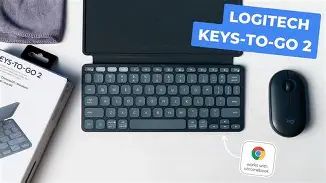
When I first unboxed the Keys To Go 2 I was struck by how light and thin it is. It slips easily into a backpack pocket and feels almost like a slim notebook when closed. The outer fabric feels nicer than a lot of cheap plastic keyboards; it's soft to the touch and has a slightly grippy texture that keeps the keyboard from sliding around when I set it down on a table. I appreciated the clean aesthetic — no flashy logos or bulky hinges, just a simple rectangular keyboard.
That fabric is more than for looks. After a few weeks of use I accidentally spilled a small amount of coffee on one corner. I immediately wiped it, and the keyboard repelled the liquid enough that it didn't affect the keys. I'm not treating this as a waterproof miracle — it does make the Keys To Go 2 more resilient to everyday spills than many competitors.
Where the build quality fell short for me was in rigidity and stability. Because the chassis is so thin and lightweight, the keyboard flexes a little when I type hard near the left edge. For everyday typing it's tolerable, but if you're coming from a heavier Bluetooth keyboard or a laptop keyboard, that flex can feel cheap. The underside lacks rubberized feet with much bite, so it can creep forward on smooth surfaces when typing quickly.
Typing experience: comfort, key travel, and noise
Typing on the Keys To Go 2 is where it mostly succeeds and where its compromises are most obvious. The keys have a short travel that reminded me more of compact laptop scissor switches than full desktop keyboards. That short travel helps keep typing fast and fairly quiet — I could easily type in a library without drawing attention.
That said, the reduced travel and smaller keycaps do take some adaptation. I noticed more typos during the first week as my fingers adjusted to the slightly shallower, firmer actuation. After a couple weeks of consistent use the mistakes reduced and typing speed returned to near my usual pace, but if you do a lot of long-form writing you may miss a deeper, more tactile switch.
Key spacing and layout are worth calling out. The Keys To Go 2 keeps a compact layout to reduce size, which means some keys (like the arrow cluster and function row) are tighter than on a full-size board. I was surprised by how comfortable the main alphanumeric block felt — it's roomy enough for touch typists — but function and navigation keys felt cramped when I needed them often.
Connectivity and multi-device use
Pairing the keyboard to my tablet and phone was straightforward. The Keys To Go 2 supports Bluetooth and can remember multiple devices; switching between them is handled with a simple key combo. In day-to-day use I paired it to an iPad and my work phone. Switching between devices worked reliably most of the time.
That said, I did hit a couple of frustrating moments. When I had multiple Bluetooth peripherals active (mouse, headset, and the Keys To Go 2), there were occasional pairing hiccups and a rare drop where the keyboard went quiet for a second or two. These interruptions were infrequent but noticeable during a live call or when I was racing to finish an email. If you rely on rock-solid uninterrupted Bluetooth in a crowded environment, you might want to test this configuration with your devices first.
Find top-rated Electronics products at great prices.
Browse Now →Battery life and charging
Battery life is one of those areas where personal usage patterns make a big difference. In my use — typographical bursts throughout the day, regular switching between two devices, and fairly light backlight usage (if you choose a backlit model) — I easily went multiple weeks between charges. I wasn't obsessively measuring days, but I charged it only a few times in several months.
Charging is via a modern USB-C port, which I appreciated. That meant I could use the same cable and charger that I use for my phone and tablet. A full charge was reasonably quick and didn't keep me waiting long before I could get back to work.
Special features and OS support
One thing I liked was how the Keys To Go 2 handles OS shortcuts. It ships with a layout that includes common media and system keys for iOS, Android, and Windows. On my iPad the home/search/media keys worked as expected, and on my Android phone I could switch between apps and control media without fuss. If you live in a mixed-OS household, that cross-platform thinking pays off.
What I missed, however, was more advanced customization out of the box. There's minimal onboard remapping, and the companion app (if available for your platform) is lightweight. If you want deep macro support or programmable layers, the Keys To Go 2 isn't designed for that — it's made for simplicity and mobility.
Portability and case options
Portability is the product's strongest suit. I carried mine in a small sleeve and barely noticed the extra weight. Because it is so thin, I could put it in the same pocket as a slim folio or behind an iPad without adding bulk. The slim profile does mean it doesn't double as a protective folio cover like some keyboard cases, so if you want keyboard + screen protection you will need a separate case.
There are official and third-party fabric sleeves and folios that integrate the keyboard, but I found that keeping it in a padded pocket was sufficient and kept the overall footprint lower. If you travel frequently and want a single piece that protects your tablet and functions as a keyboard, consider that trade-off carefully.
What I appreciated
- True portability: I noticed how easily it fit into a bag and how little weight it added to my daily carry.
- Quiet typing: The low-profile keys are pleasant for long typing sessions in public places.
- Durable fabric finish: It survived light spills and daily grime with a quick wipe.
- Cross-platform convenience: Works cleanly with iPad, Android, and Windows without reconfiguration.
What disappointed me
- Flex and stability: The very thin chassis flexes under firm keystrokes and can slide on smooth surfaces.
- Limited customization: No advanced remapping or macro support for power users.
- Cramped function/navigation keys: The compact layout makes navigation keys less comfortable.
- No built-in stand: You'll need a separate stand or case to prop a tablet at a comfortable viewing angle.
Pros & Cons
- Pros:
- Extremely portable and lightweight
- Quiet, pleasant typing for an on-the-go keyboard
- Resilient fabric finish handles spills and dirt
- Simple, reliable Bluetooth pairing across platforms
- USB-C charging
- Cons:
- Chassis flex and limited surface grip
- Reduced key travel may not satisfy heavy typists
- Limited advanced features or customization
- Not a protective folio — you need separate protection for tablets
Comparison: Keys To Go 2 vs similar ultraportable keyboards
| Feature | Keys To Go 2 | Typical Compact Bluetooth Keyboard (e.g., K-type) | Laptop-style Folio Keyboard |
|---|---|---|---|
| Portability | Very high — ultra-thin and light | High — small, but sometimes thicker | Moderate — doubles as protection but bulkier |
| Typing comfort | Good for short/medium sessions; shallow travel | Varies — often better travel if slightly larger | Best of the three — larger keys and more travel |
| Durability / spill resistance | Good — fabric repels light spills | Variable | Good — some are spill-resistant |
| Device protection | No — requires separate case | No | Yes — integrated folio protects screen |
| Connectivity reliability | Generally reliable, occasional hiccups in busy Bluetooth environments | Usually reliable | Very reliable (often designed with specific tablet in mind) |
| Customization | Minimal | Some models offer remapping or apps | Limited, unless premium |
Who should buy the Keys To Go 2?
In my experience, the Keys To Go 2 is a great fit if you fall into one or more of the following categories:
- You want the lightest possible external keyboard to carry daily without adding bulk.
- You do a lot of short- to medium-length typing sessions while traveling, in cafes, or on public transit.
- You value a quiet, discreet keyboard for public spaces.
- You prefer a clean, minimalist aesthetic and cross-platform key support.
If you're a heavy typist who spends hours drafting long documents every day, a thicker keyboard with more travel or a laptop-style folio may be more comfortable. Likewise, if you want your keyboard to double as a protective cover or stand for your tablet, the Keys To Go 2 isn't designed to be that all-in-one solution.
Buying guide: what to consider before you buy
1. How much typing do you do?
Think about session length. I found the Keys To Go 2 comfortable for a few hours at a time, but my wrists did feel the lack of a tilt after longer sessions. If you write for a living, prioritize key travel and ergonomics over absolute portability.
Discover deals on Electronics — updated daily.
View Offers →2. Do you need an integrated stand or case?
Decide whether you want a keyboard that also protects your tablet. I prefer separate protection to keep weight down, but if you want a single accessory that does everything, look at folio keyboards instead.
3. Cross-platform needs
If you frequently switch between iPad, Android, and Windows, the Keys To Go 2's layout and built-in shortcuts are convenient. Make sure the specific key layout on the model you choose matches your primary platform — iOS-specific symbols and shortcuts vary by region and model.
4. Connectivity environment
In crowded Bluetooth environments, some keyboards behave better than others. I recommend testing the keyboard in your typical environment or confirming return policies if you suspect frequent Bluetooth interference will be an issue.
5. Portability vs comfort trade-offs
Ask yourself whether you want the absolute smallest keyboard or a slightly larger one that types more like a laptop. I personally chose portability and accept the trade-offs, but if ergonomic comfort is your priority, consider a model with more depth and a built-in tilt.
6. Battery and charging
USB-C is now common and convenient. If you travel with other USB-C devices, this is a plus. Keep in mind battery life will vary — my usage gave me multiple weeks per charge.
Real-world usage notes and tips I picked up
- I keep a thin rubber pad under the keyboard when I’m on a smooth café table; it prevents the keyboard from sliding and makes typing feel steadier.
- Using a small clip-on tablet stand with the keyboard creates a comfortable laptop-like arrangement without adding much bulk to my pack.
- For long writing sessions, I alternate between the Keys To Go 2 and a full-size wireless keyboard at home to reduce wrist fatigue.
- Pairing: delete old pairings occasionally to avoid connection slowdowns if you use the keyboard with many different devices.
Conclusion: Is the hype justified?
After several months of regular use, my verdict is nuanced. The Keys To Go 2 earns its hype in the portability and everyday convenience departments: it’s one of the most travel-friendly keyboards I've used, with a quiet typing profile and a fabric finish that feels premium compared to most ultraportables. For quick edits, emails, and note-taking on the go, it’s hard to beat.
At the same time, the hype glosses over important trade-offs. The thin chassis flexes, key travel is limited compared to larger keyboards, and it doesn't replace a folio or stand. If you expect a keyboard that performs like a full-size laptop keyboard or provides device protection, you’ll be disappointed.
In my experience, the Keys To Go 2 is worth it if you prioritize minimalism and portability and accept some ergonomic compromises. If you need long-session comfort or an integrated case, look elsewhere. For what it is — a lightweight, attractive, and resilient on-the-go keyboard — it mostly delivers on the promise, but it's not a universal solution for every user.